Pink Phosphor
Розовый люминофор
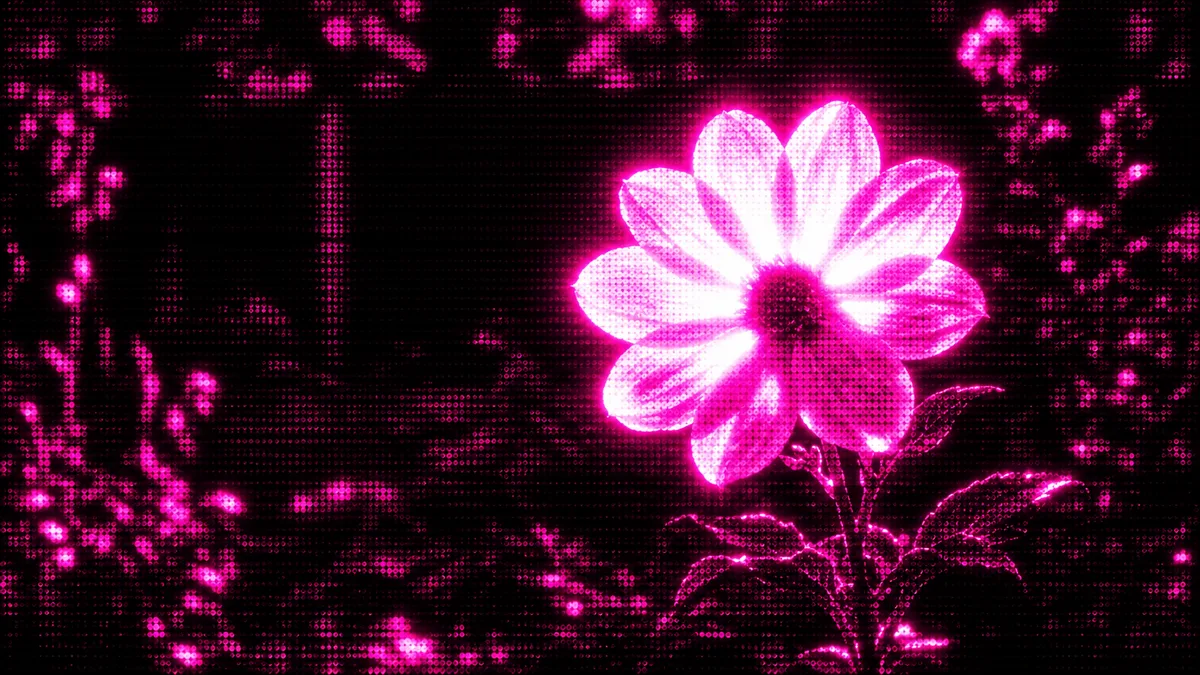
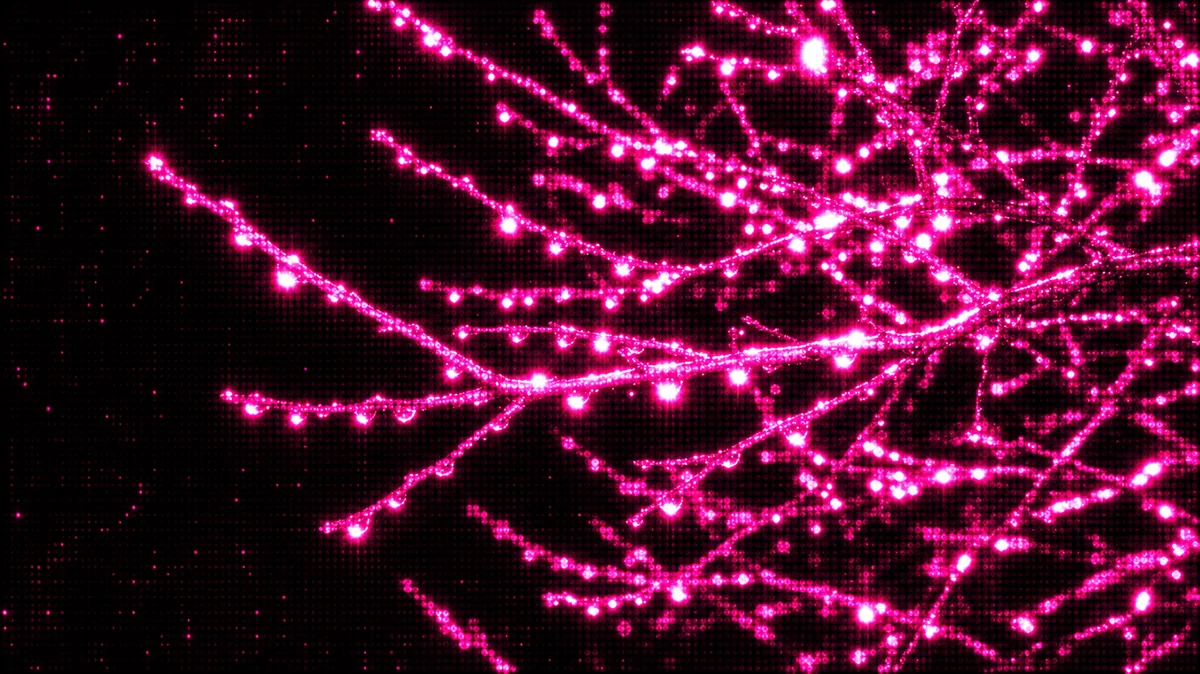

Фото выглядит как изображение на одноцветном экране: формы складываются из горячих розовых светящихся точек на чёрном фоне. Яркие участки выгорают до почти белого, а тени исчезают в чёрном.
Промпт
Rebuild the uploaded image as a single channel phosphor display image: the entire picture drawn in one colour on absolute black, with a visible dot matrix and blown out highlights, filling the whole frame.

THE CORE CONCEPT, read this first:
There is exactly one hue in this image and it is a hot fluorescent magenta pink. Every bright thing in the frame is that magenta at some intensity, from a dim smoulder up to a white hot core, and every dark thing is pure black. All the original colour information has been thrown away and replaced by brightness alone, mapped onto this one phosphor. This is not a pink tinted photo, not a duotone with a second colour, not a neon outline, and not a photo with a pink light on it: it is one channel, magenta on black.

THE STRUCTURE:
The image is built from a visible regular dot matrix: a fine grid of round emitting cells, 2 to 4 pixels apart, clearly readable in the mid tones and merging into solid glow where the signal is strongest. Between the dots the grid gaps stay black, so the whole picture carries a woven screen texture. A faint horizontal scan structure runs across the frame, slightly darker every few rows. Very slight vertical streaking is allowed in the brightest areas, as if the phosphor were smearing.

THE RESPONSE, this is what makes it look overdriven:
The gain is pushed far too high. The brightest 15 percent of the image blooms: it blows out into near white pink cores, spills a soft magenta halo of 6 to 16 pixels into the black around it and loses all internal detail. Mid tones stay clearly dotted. Shadows crush completely to pure black with only scattered isolated dots surviving, like stray hits on a sensor. Fine detail in the dark parts reads as sparse specks rather than continuous texture.

THE SCREEN:
The image fills the frame edge to edge. A very slight barrel curve of the picture and a gentle darkening of the corners are allowed, but no bezel, housing or surrounding room.

WHAT SURVIVES:
Keep the original composition, framing, crop, subject and pose exactly. Shapes must still be readable from brightness alone, so the subject and the scene stay recognisable even though everything is one colour.

NEGATIVE CONSTRAINTS:
No second hue anywhere in the image: no purple, no orange, no red, no cyan fringing, no chromatic aberration. No dark grey background, the black must be absolute. No smooth continuous gradients, the dot matrix must stay visible. No photographic skin tone or any natural colour surviving. No RGB channel splitting, no glitch bands, no interface, no monitor housing. No text, no logos, no watermark. Do not change the composition or the crop.

The final result must look like a real photograph displayed on a single colour phosphor screen with the brightness turned up far past what the tube can handle.
Как использовать
Загрузите фото с яркими деталями на тёмном фоне. Примените промпт.
Если получилась просто фотография с розовым фильтром, используйте команду исправления для восстановления точечной матрицы и чёрных теней.
Only fix the palette and the screen: remove every hue except the magenta, crush the background and the shadows to pure black, and make the dot matrix visible again in the mid tones. Keep the composition and the crop identical.
Похожие приёмы
Glitch
Глитч
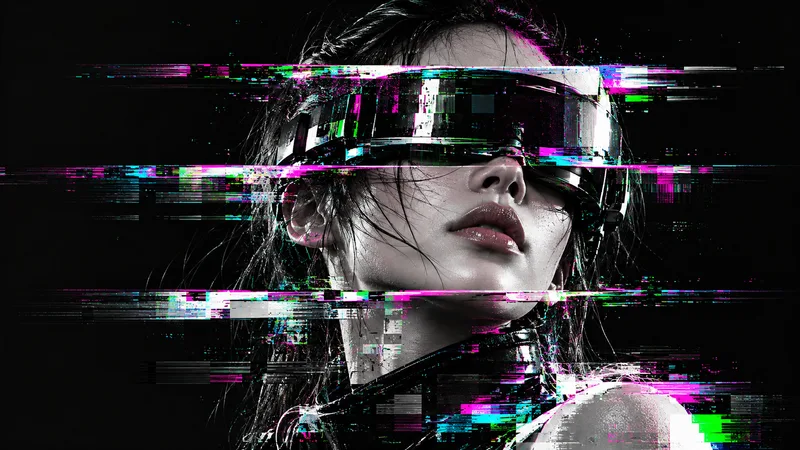
Distort the subject with a controlled digital glitch treatment. Keep a strong black or near-black base, one clear hero image or short bold headline, and introduce localized horizontal signal tears, RGB channel offsets, pixel-sorting streaks, corrupted scanlines, compression blocks, and displaced image slices. Place interference mainly around the subject's edges or in selected bands so its identity remains legible. Use white typography with small magenta, cyan, and electric-green artifacts if exact text is requested. Let a few fragmented interface windows or error-like rectangles add context wi
Psychedelic
Психоделика
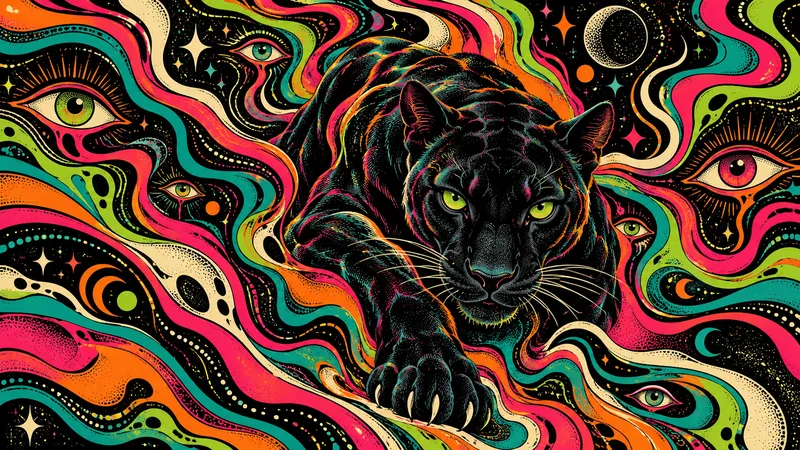
Translate the subject into a dense psychedelic graphic artwork. Let sinuous, liquid-like bands ripple through the 16:9 frame in hot magenta, acid orange, electric green, turquoise, cream, and deep black. Add intricate dotted trails, small celestial marks, and a limited number of stylized eyes or organic motifs where they support the subject. Use rhythmic repetition, warped contours, and surprising color adjacency to suggest hallucinatory motion while keeping the central subject recognizable and a clear visual path through the image. The pattern should feel hand-inked or screen-printed, with fi

Retro
Ретро
Style the subject as a late-1970s to 1990s analog print advertisement or music poster. Use a charcoal or faded-black background, burnt-orange and warm-cream typography or graphic blocks, and a central era-appropriate object treatment such as a photographed cassette, printed photo, or vintage product cutout when it fits the subject. Add subtle film grain, faded inks, imperfect registration, soft wear, paper fibers, and slightly aged contrast. Give the layout a bold top anchor, one clearly framed central subject, and a strong lower visual weight. Typography, if requested, should evoke old displa