M. C. Escher: Impossible Graphic Worlds
Мауриц Корнелис Эшер: невозможная графика
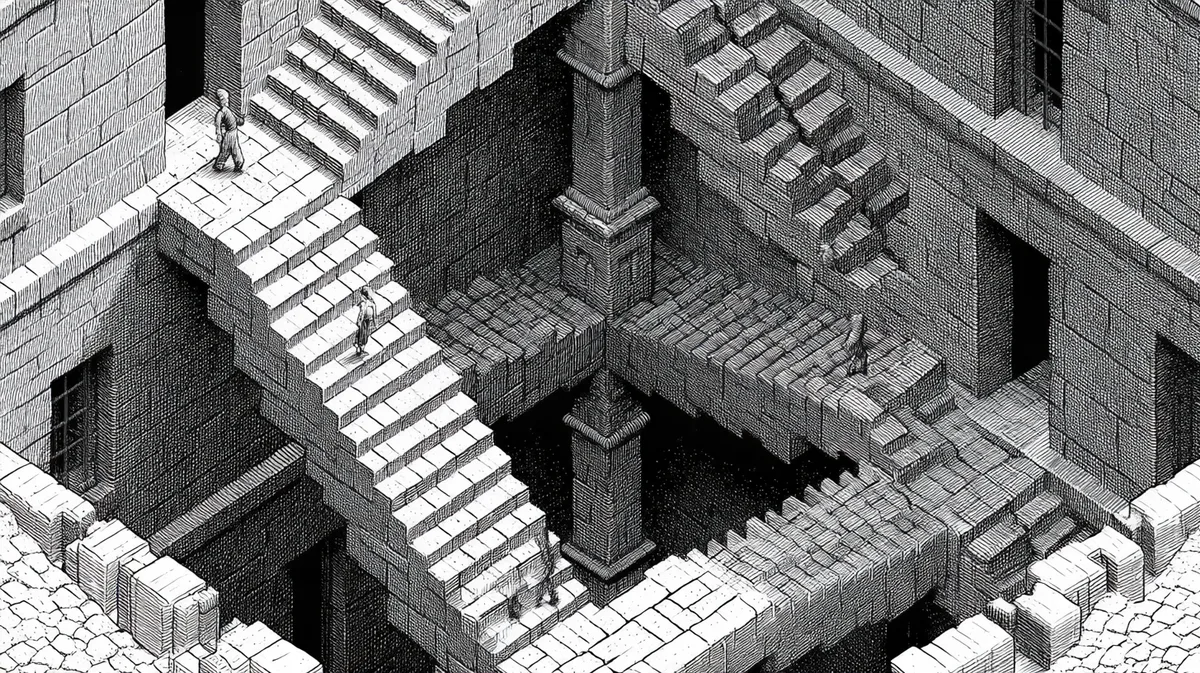
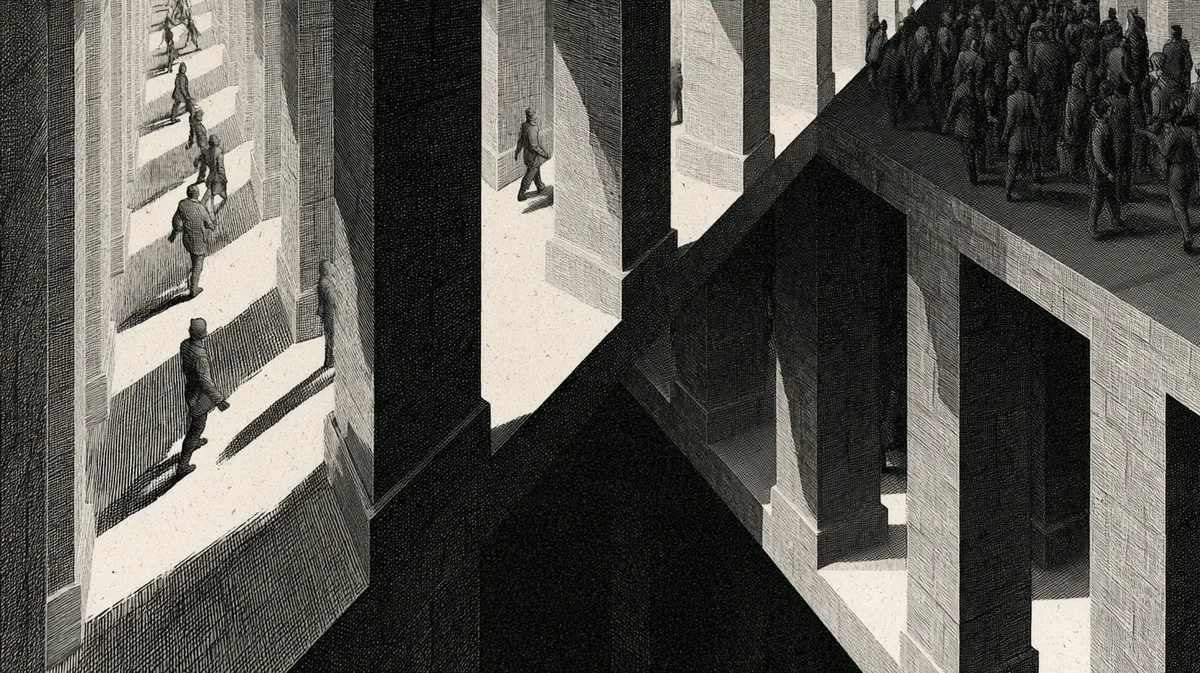
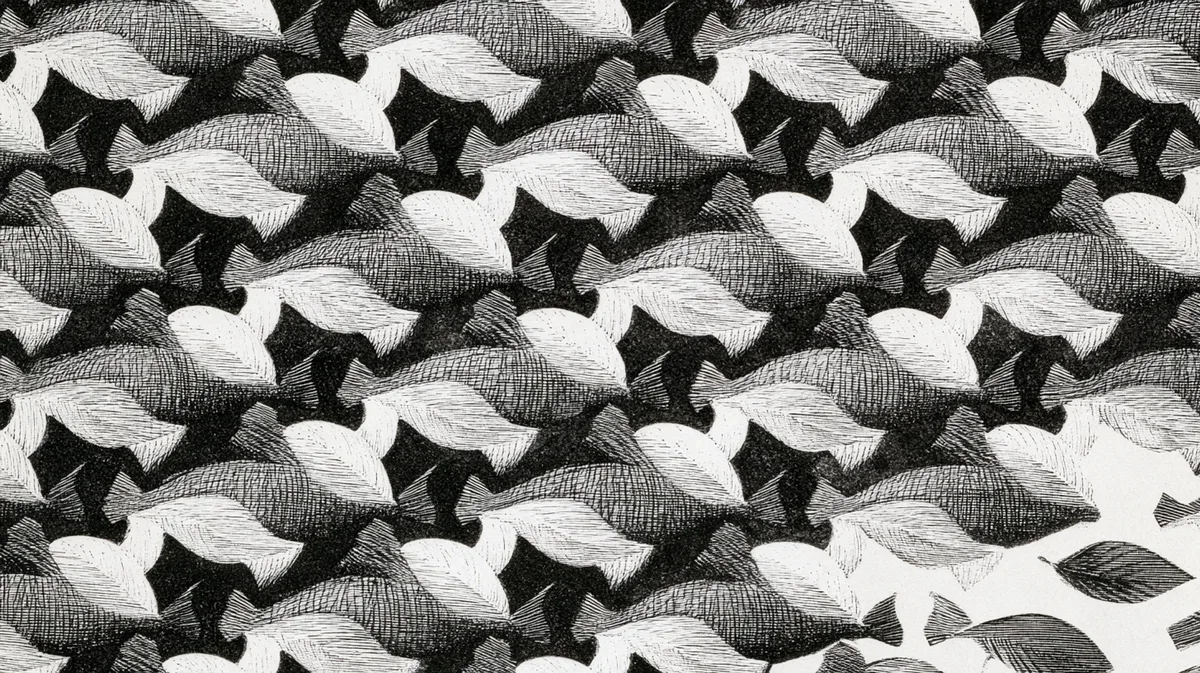
Точная чёрно-белая графика соединяет правдоподобные детали в невозможную систему. Важны проверяемые соединения, штриховка и логика формы, а не случайный набор лестниц.
Промпт
In the artistic style of M. C. Escher.

Monochrome graphic art with exact linework, disciplined hatching and a carefully constructed optical paradox. Use black, white and intermediate gray values generated through line density or lithographic grain, not photographic gradients. Maintain locally convincing perspective and material structure, then connect those valid parts into a globally impossible spatial system when architecture is requested. For patterned motifs, make neighboring shapes fit precisely and allow controlled transformations between positive and negative forms. Keep the visual logic inspectable, with repeated units, clear junctions and deliberate scale. The surface should resemble a finely printed drawing rather than a polished 3D render. Favor intellectual tension and precise craftsmanship over dreamlike atmosphere. Do not merely add random stairs, bend objects arbitrarily or copy a known existing print."
Как использовать
Опишите один конкретный пространственный парадокс или превращение узора. Добавьте стиль. Сложные соединения обязательно проверяйте после генерации: красивый рисунок ещё не доказывает невозможную конструкцию.
Если нейросеть не генерирует из-за цензуры, то удалите только первую строчку с именем художника.
Похожие приёмы
Hilma af Klint: Organic Symbolic Abstraction
Хильма аф Клинт: органическая символическая абстракция
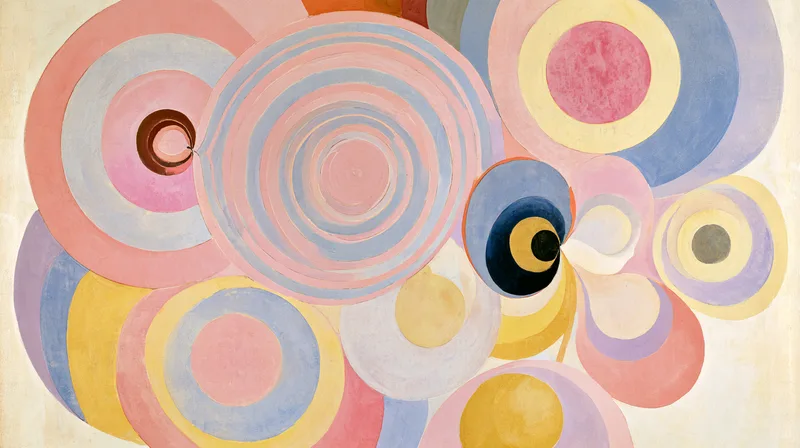
In the artistic style of Hilma af Klint. Symbolic abstract painting combining organic growth-like forms with clear geometric structures. Use large spirals, disks, ovals, petal-like curves and measured divisions, arranged with a sense of systematic development rather than random decoration. Favor pastel pink, pale blue, soft yellow, lavender, warm white and selected darker accents, with matte, opaque paint and slight handmade variation. Let forms overlap, mirror or unfold in sequences that suggest transformation and connectedness. Keep depth shallow and the composition spacious, balancing biomo
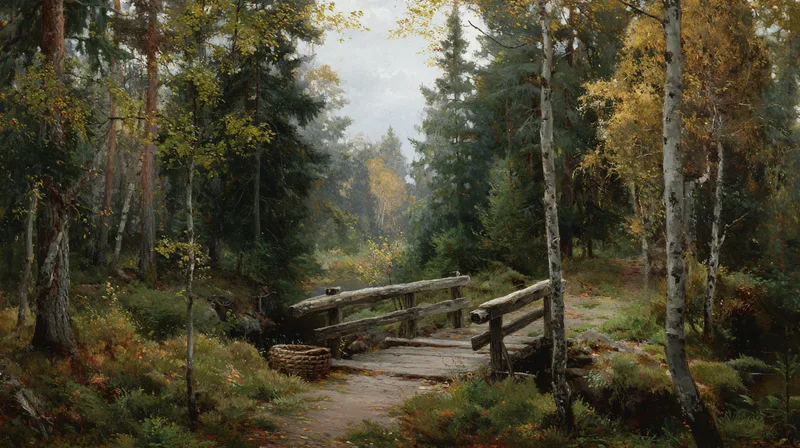
Ivan Shishkin: Forest Realism
Иван Шишкин: точность лесного пейзажа
In the artistic style of Ivan Shishkin. Nineteenth-century realist landscape oil painting with meticulous botanical observation and a strong, coherent structure of natural space. Render trees, bark, roots, branches and ground cover with specific, varied detail rather than repeating generic textures. Use a believable range of deep green, warm brown, ochre and blue-gray atmospheric distance, with light filtering through the scene in clear, physically consistent patterns. Balance close detail with large compositional masses so the image remains readable as a whole. Foreground forms carry weight a
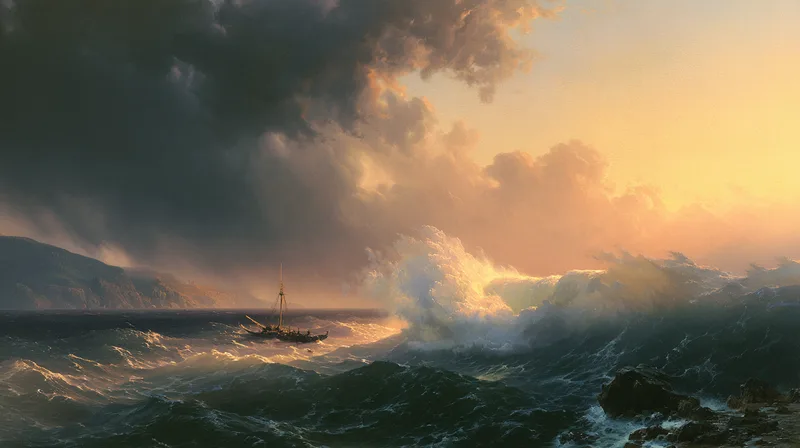
Ivan Aivazovsky: Luminous Water
Иван Айвазовский: свет внутри воды
In the artistic style of Ivan Aivazovsky. Romantic marine oil painting with translucent water, carefully graded atmospheric depth and light passing convincingly through moving forms. Use deep green, blue-gray and turquoise in shadowed water, answered by warm gold, pale rose or silver illumination. Build waves through smooth glazes and selective bright, fine strokes for foam, keeping their volume and motion coherent. Clouds and distance soften gradually while important foreground water remains more clearly modeled. Compose through broad diagonals, curved wave masses and a balance of immense nat